Key Themes for Today’s Reflection
- Living in the Present: Staying focused on Christ’s immediate presence rather than becoming overwhelmed or anxious about tomorrow’s plans.
- Trusting Through Adversity: Viewing difficult circumstances or unexpected changes not as disruptions, but as opportunities to lean on His strength and seek peace.
- Gratitude and Grace: Practicing thankfulness in all situations and extending patience and grace to yourself and others.
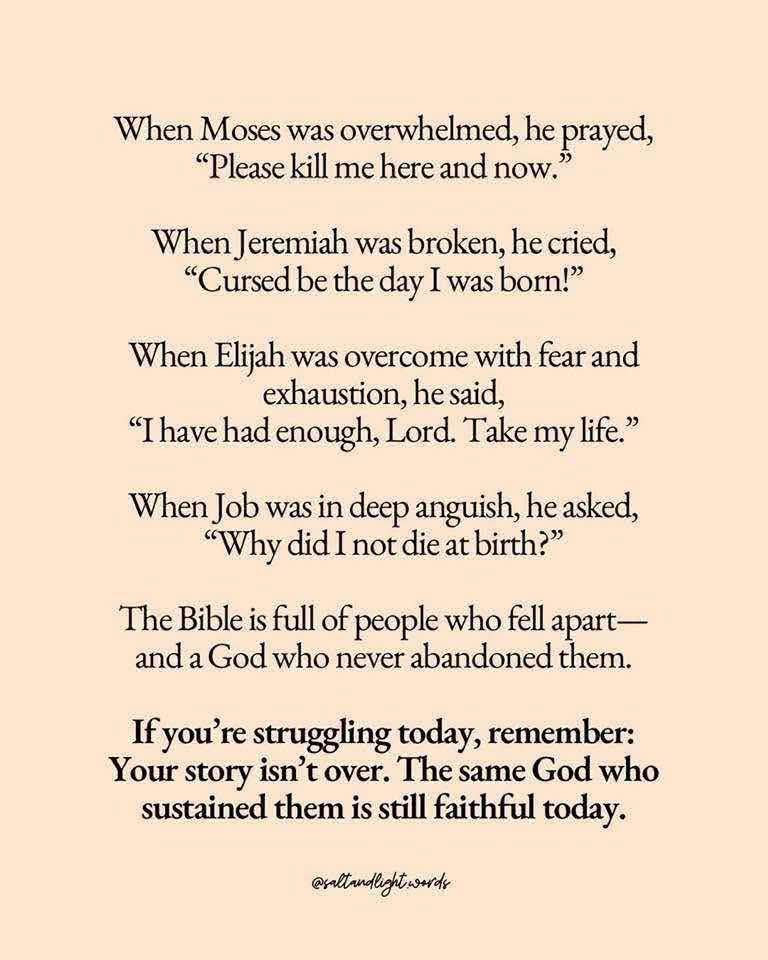
The Bible does not hide the messes, failures, and broken moments of its central figures;
rather, it highlights how real, flawed people interacted with a faithful God. [1, 2]
Well-Known Biblical Figures Who “Fell Apart”
David: An adulterer and murderer who struggled deeply with guilt and mental health, yet is still described in scripture as a person “after God’s own heart”. [1]
Peter: An impulsive disciple who panicked and denied knowing Jesus three times before the crucifixion, yet later became a foundational leader of the early church. [1, 2]
Moses: A leader plagued by self-doubt and severe anger issues who murdered an Egyptian and argued with God in the desert.
Elijah: A prophet who performed major miracles but later fell into deep depression, exhaustion, and despair, begging God to let him die (1 Kings 19).
Paul (Saul): A man who actively persecuted, imprisoned, and approved the murder of early Christians before his dramatic turnaround.
The Classic Proverb
The famous quote often attributed to the British preacher Charles Spurgeon reverses the phrase:
“A Bible that is falling apart usually belongs to someone who isn’t.” [1]
The core theme across these stories is that the narrative isn’t a checklist of human perfection, but a record of grace stepping in when people hit their limits.


Leave a Reply