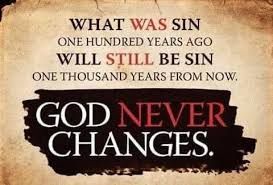
Key Bible Verses on God’s Unchanging Nature
- Malachi 3:6 — “For I am the Lord, I do not change; therefore you, O sons of Jacob, are not consumed.”
- Hebrews 13:8 — “Jesus Christ is the same yesterday and today and forever.”
- James 1:17 — “Every good gift and every perfect gift is from above, and comes down from the Father of lights, with whom there is no variation or shadow of turning.”
- Numbers 23:19 — “God is not a man, that He should lie, nor a son of man, that He should change His mind. Has He said, and will He not do? Or has He spoken, and will He not make it good?”
- Psalm 102:25–27 — “Of old You laid the foundation of the earth… They will perish, but You will endure… But You are the same, and Your years will have no end.”
- Isaiah 40:8 — “The grass withers, the flower fades, but the Word of our God stands forever.”
- 2 Timothy 2:13 — “If we are faithless, He remains faithful; He cannot deny Himself.”
- 1 Samuel 15:29 — “Also the Strength of Israel will not lie nor relent. For He is not a man, that He should relent.”
Jesus Christ is the same yesterday, and today, and forever (Hebrews 13:8).
This foundational biblical verse highlights the unchanging character, eternal nature, and steadfast love of Jesus Christ:
- Yesterday: Refers to His past faithfulness, historical ministry, and grace shown in the Gospels.
- Today: Means He remains active, present, and just as compassionate and powerful in the current age.
- Forever: Guarantees His sovereign promises and identity will never alter through all future ages, offering stability in a shifting world.
I was led to share this account of Jesus calming the storm in lieu of The unchanging nature of God/Jesus/Holy Spirit… What was/is/will be sin is unchanging.
Core Concepts
- Definition of Sin: Scripture defines sin as lawlessness, rebellion, or transgression against God’s moral law (1 John 3:4) and failing to live up to His standards (James 4:17). Because God’s nature and holiness do not shift over time, what He defines as right or wrong remains constant across every era. [1, 2, 3]
- Immutability of God: Christian theology holds that God is immutable—meaning His core essence, truth, and moral principles are permanent. Consequently, human societal consensus, cultural shifts, or modern trends cannot alter what constitutes a sin. [1, 2, 3]
- Tension and Perspectives: While conservative theological viewpoints maintain that moral laws (such as the Ten Commandments) are timeless and universal, broader cultural and progressive discussions often debate how ancient commands apply to modern contexts, leading to ongoing dialogue about how scripture is interpreted.
For a second, let’s go back to the garden of Eden! Did Adam, the first Created being ever trip and fall? It is not recorded! But, if he did, it was a lesson of what to avoid. It is amazing that God’s Essence would visit with Adam!
According to theological tradition and scripture (Genesis 3:8), God walked and fellowshipped with Adam in the Garden of Eden in the cool of the day.
However, mainstream Christian theology and classical philosophy distinguish between seeing God’s divine essence versus experiencing His Presence or energies:
- Essence vs. Energies: Traditional Christian theology (such as in Eastern Orthodoxy) holds that humans cannot look upon the uncreated divine essence of God in its fullness and live; instead, Adam and Eve experienced God’s uncreated Presence or energies.
- Theophany / Pre-Incarnate Christ: Many Christian interpretations view these interactions as a theophany (a visible, tangible manifestation of God) or an appearance of the pre-incarnate Christ (the Son before taking human flesh in Jesus), since scripture states no man has seen God the Father in full.
- Anthropomorphism: Other theologians view “walking in the garden” as an anthropomorphism—using human-like language to describe a personal, intimate, and real communion between Creator and creation before sin entered the world.
God’s Presence everywhere at the same time is known as omnipresence.
In Christian theology, this means that the entire essence of God is fully present in every part of the universe simultaneously, without division or limitation by space, time, or physical boundaries.
Key Aspects of Omnipresence
- Full Presence: God is not divided or stretched thin across the universe; His entire being is present at every single point.
- Distinct from Creation: Omnipresence means God fills and sustains all things, but He is not the universe itself (distinguishing the concept from pantheism).
- Scriptural Foundation: Passages like Psalm 139:7-8 and Jeremiah 23:24 emphasize that there is nowhere in heaven, earth, or the depths where God is absent.
Types of Divine Presence
- Omnipresence: The constant, unchanging reality that God is everywhere at once.
- Indwelling Presence: The specific way God lives inside believers through the Holy Spirit.
- Manifest Presence: Occasional, experiential moments where God makes His presence overtly known and felt (such as through comfort, guidance, or historical events)
And we pray:
Father LORD, Your Essence is forever present everywhere. There is no ‘running’ from Your Essence. Everything we ever do/say/speak is Known by You before it comes to being:
Psalm 139:4
“Even before a word is on my tongue, behold, O LORD, You know it altogether.” (ESV /
We are fully Known by God! Even the number of our days are written before we are born!
Psalm 139:16 reflects the biblical passage: “Your eyes saw my unformed body; all the days ordained for me were written in Your book before one of them came to be”.
Father, You know me inside and out:
Psalm 139, which reminds us that God sees and understands every part of our lives.
There is never ever going to be an excuse, You have provided Your Word, and move our spirits to have it engraved on our hearts:
🔑 Biblical References
• Jeremiah 31:33 (The New Covenant): God promises, “I will put my law in their minds and write it on their hearts. I will be their God, and they will be my people”. This is also referenced in Hebrews 8:10 and Hebrews 10:16.
• Deuteronomy 6:6 & 11:18: Believers are instructed to take God’s commands and fix them directly upon their hearts and minds.
• Proverbs 3:3: Encourages writing truth and mercy “on the tablet of your heart”.
• 2 Corinthians 3:3: Describes believers as a letter from Christ, “written not with ink but with the Spirit of the living God, not on tablets of stone but on tablets of human hearts”.
Father, let Your Word constantly lead, guide, correct and enlighten me, I pray in Jesus’ Name, Amen.


Leave a Reply