Dear God, thank You for bringing me through another week safely and 8n good health, Ihive You all the glory and praise!!! As I get ready to rest tonight, I’m asking You to help me see the areas in my life where I need to obey You. Your Word in 1 John 5:3 says, “For this is the Love of God, that we keep His commandments. And His commandments are not burdensome.” God, there have been moments where You’ve directed me somewhere and I stayed put because it didn’t make sense or I didn’t feel prepared, and then I wondered why things didn’t work out. Just like Elijah trusted You even when the instruction sounded strange, help me stop praying about decisions You’ve already answered and start walking in obedience instead. I give this night completely to You. Thank You for hearing my prayer and knowing exactly all I cannot put into words. In Jesus’ name, Amen. Father You know my heart, wants, needs and desires… In my life, Your will be done; I pray in Jesus’ Name, Amen.
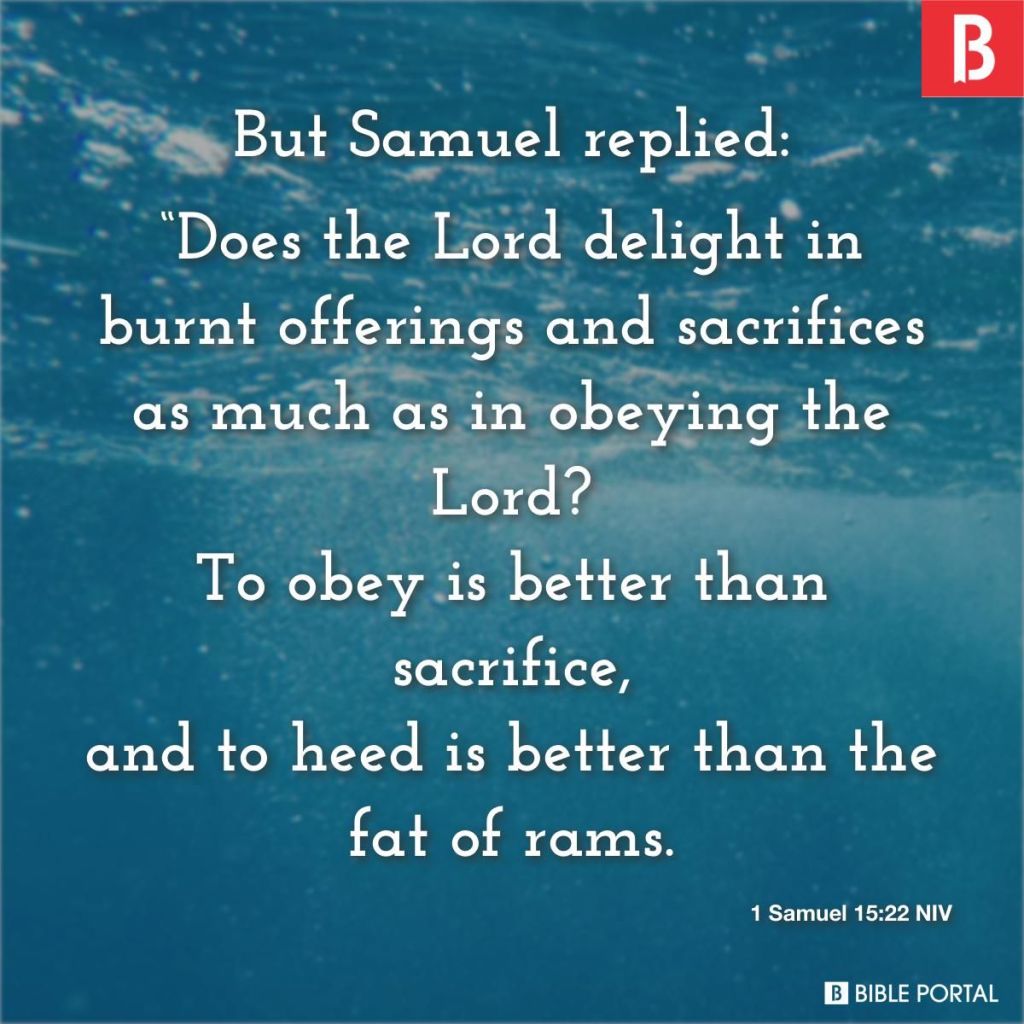
To obey is better than sacrifice, and to heed than the fat of rams. 1 Samuel 15:22
King Saul attempts to justify his disobedience by claiming that the best sheep and oxen spared from the Amalekites which he kept to sacrifice to God at Gilgal.
Key Themes of the Lesson
- Deflection and Blame-Shifting: When confronted by the prophet Samuel, Saul immediately passes the blame onto his soldiers (“the people took of the spoil…”) rather than taking personal responsibility as king.
- Rationalizing Disobedience with Religion: Saul masks a clear violation of God’s direct command under a cloak of “spiritual” intentions—claiming he wanted to offer a sacrifice.
- Partial Obedience is Disobedience: God did not ask for a percentage of the plunder or a delayed compliance; He commanded total destruction of the Amalekite goods (herem). Doing most of what God said while keeping the best for oneself equals rebellion.
- Obedience Over Ritual: This verse directly sets up Samuel’s famous declaration in 1 Samuel 15:22: “To obey is better than sacrifice”. Religious acts, offerings, or service cannot substitute a surrendered, obedient heart.
- The Cost of Pride: Saul’s actions stemmed from caring more about his own reputation and rationalizations than God’s clear authority, ultimately costing him his kingdom.
Discussion Questions for Personal Reflection
- Where do you find yourself rationalizing or making excuses for half-obeying God’s Word?
- Are there areas in your life where you substitute “religious activity” or good intentions for actual, humble submission to what God has asked you to do?
- How does blame-shifting prevent true repentance?


Leave a Reply