In Christian tradition, to magnify the Lord—based on passages like Psalm 34:3—does not mean making God physically larger (since God is already infinite). Instead, it means making God more prominent and visible in one’s life. Believers typically do this by:
- Focusing on God’s character and promises rather than daily troubles or worries.
- Serving others faithfully using their gifts for the good of people around them.
- Offering prayer, worship, and singing to express gratitude and devotion.
After my accident and experience, I am learning to place God first in my life/my existence! God never sleeps! Ugh! Why do I say “Good Miorning, Heavenly Father, thank You Jesus, Holy Spirit this is Your day, Amen 🙏🏾.
Prayer (speaking to my Creator, Who knows everything about me.
My day is totally in God’s hands! has become key! I woke up! How many people went to bed and did not wake up??? A key reason to give thanks! I woke up this morning! Hallelujah!!!
Placing your day in God’s hands means releasing the need to control every outcome and trusting in His guidance, strength, and sovereign care.
Key Aspects of Trusting God with Your Day
- Surrender of Control: Letting go of stress, worries, and plans you cannot change, and trusting that what feels too heavy for you is safe with Him.
- Active Faith: It is not a passive choice to do nothing, but an active decision to focus on what you can influence while leaving the bigger picture to Him.
- Scriptural Grounding:
- Psalm 31:15: “My times are in Your hand”.
- 1 Peter 5:7: “Casting all your anxieties on Him, because He cares for you”.
- Isaiah 41:10: “Fear not, for I am with you… I will strengthen you, I will help you, I will uphold you”.
A WHISPER FROM HEAVEN!
King Herod ‘celebrated’ his birthday with the head of John-the-baptist;
King Herod Antipas celebrated his birthday with a lavish banquet where his stepdaughter, traditionally identified as Salome, danced for him and his guests, leading to the execution and beheading of John the Baptist.
Key Events of the Banquet
- The Imprisonment: Herod had already imprisoned John the Baptist because John publicly rebuked Herod for unlawfully marrying Herodias, his brother Philip’s wife.
- The Dance: During Herod’s birthday celebration, Herodias’s daughter danced and greatly pleased the king and his dinner guests.
- The Rash Oath: Delighted by the performance, Herod swore with an oath to give her whatever she asked, up to half his kingdom.
- The Demand: Prompted by her mother, Herodias, the girl requested the head of John the Baptist brought to her on a platter.
- The Execution: Although Herod felt deep distress, he ordered the execution in prison because of his public oath and the presence of his noble guests.
- The Presentation: John’s head was delivered on a platter and handed to the girl, who took it to her mother.
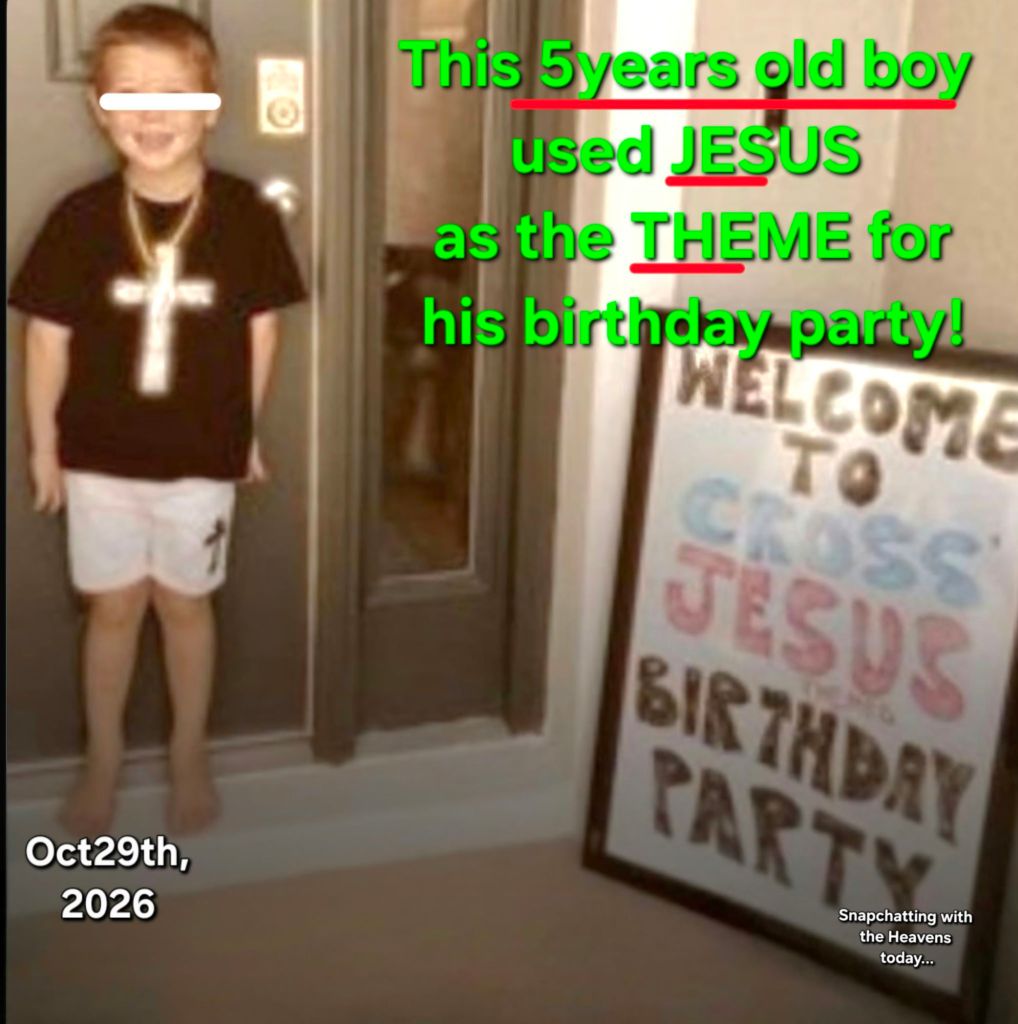
But this 5 year old boy above is a sharp contrast: he decided to use a Jesus theme as we can see in the image above, and also gave out bibles as souvenirs to the invitees. Amazing and challenging!
Where do you belong here?
This little boy might not know the implications of what he did, but I believe his parents know, and only God knows how far those bibles given would go in blessing souls. He added eternal value to his invitees compared to the trending mode of celebrations today with mundane souvenirs. Who/What do you glorify with your celebrations?
Reflection: Any celebration that showoff wealth or status rather than God has no eternal relevance!
This is a perspective rooted deeply in many religious and philosophical traditions, which emphasize humility, spiritual focus, and the idea that worldly possessions and social status are temporary.
From a theological standpoint, many faiths teach that true value lies in one’s spiritual condition, relationship with the divine, and actions toward others, rather than outward displays of material wealth. The concept of “eternal relevance” shifts the focus away from human recognition and toward eternal truths or divine approval.
The truth? It’s biblical to celebrate but with Christ in the center; God isn’t glorified when the less privileged ones are left out, or oppressed for inability to afford the “levy or clothes” for our events…
Several key biblical figures and groups are known for giving to the poor, showing generosity, or providing for those in need:
- Zacchaeus: A wealthy chief tax collector in Jericho who promised to give half of his possessions to the poor and repay fourfold anyone he had cheated after encountering Jesus (Luke 19:8).
- Dorcas (Tabitha): A disciple in Joppa known for her constant good works and acts of charity, particularly making clothes and tunics for the poor and widows (Acts 9:36).
- Cornelius: A Roman centurion who was described as devout, God-fearing, and one who gave generously (alms) to the poor and prayed to God regularly (Acts 10:2).
- The Poor Widow: Praised by Jesus for putting two small copper coins (a mite) into the temple treasury, giving out of her poverty rather than her abundance (Mark 12:41-44).
- Barnabas: An early Christian leader who sold a field he owned and brought the money to the apostles to help meet the needs of the community (Acts 4:36-37).
- The Macedonians: Early church believers who, despite their extreme poverty and severe trials, pleaded for the privilege of sharing in giving generously to others (2 Corinthians 8:1-4).
- The Good Samaritan: A traveler who used his own time, oil, wine, animal, and financial resources to rescue, bandage, and care for a wounded man left half-dead on the road (Luke 10:30-35).
A message for us!
It is well.🙏🔥


Leave a Reply