God’s Love and Presence remain constant for His children, supported by enduring scriptural promises.
Key Scriptural Foundations
- Unfailing Love: The Love of God never ends, changes with circumstances, or fades with time (Psalm 136:1).
- Constant Presence: God promises never to leave or forsake His people (Hebrews 13:5 / Psalm 37:25).
- Personal Relationship: Believers are adopted as children with direct access to God as a Loving Father (1 John 3:1, 2 Corinthians 6:18).
- Eternal Security: Nothing in creation can separate His children from His Love (Romans 8:38-39).
God’s Love for His children endures forever, which means it never ends. Most things in our life will end at some point but the Love of God will always be ours. We are to forever praise and worship the Lord, giving thanks for His great Love. He truly cares about each one of us so that He pours His Love out on us every second of our life. That should be totally amazing to all of us. He is an awesome God!!
“Give thanks to the Lord, for He is good; His love endures forever.”
1 Chronicles 16:34 NIV
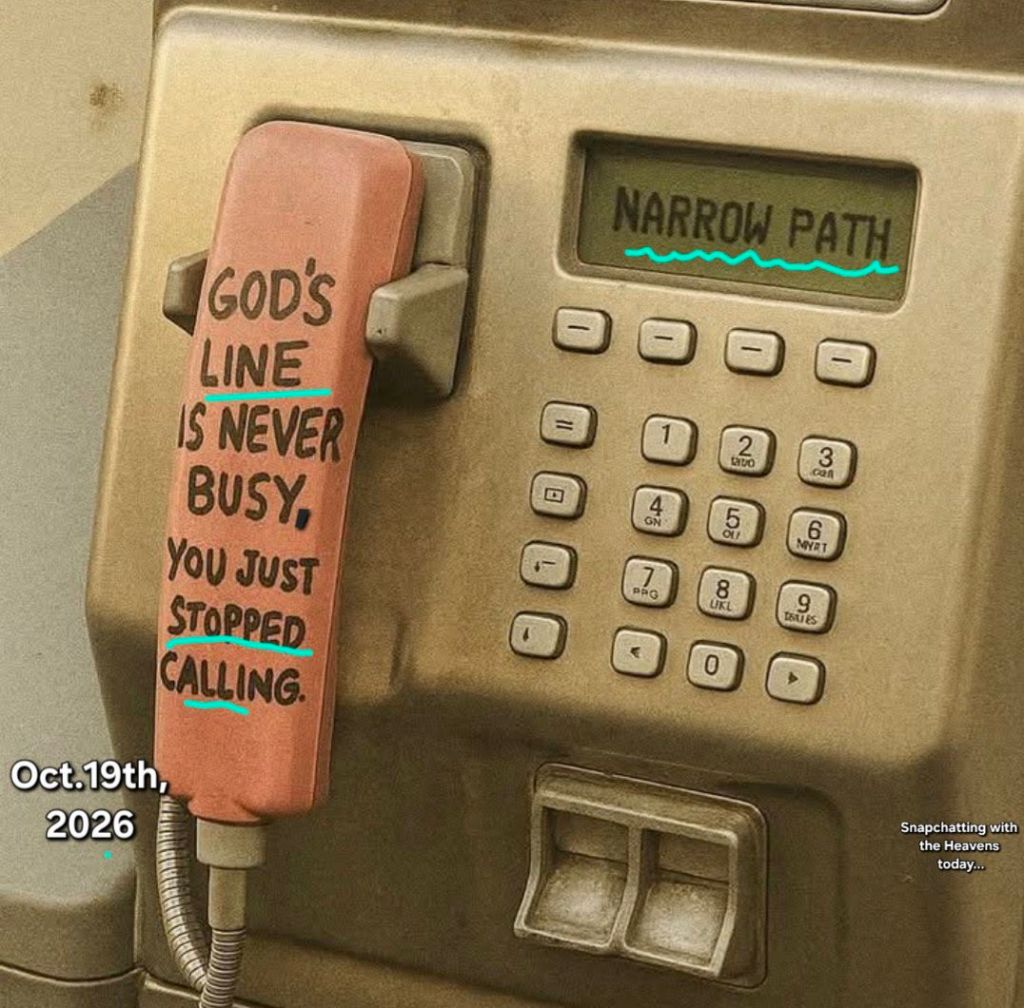
A WHISPER FROM HEAVEN!
📌 What can make you stop praying to God?
Loss of hope and unfulfilled expectations in the “waiting room of life” cause people to stop praying, as delayed or unanswered prayers make them feel their voice no longer matters.
Common Psychological and Spiritual Factors
- Loss of Hope and Disillusionment: Believers often stop when continuous requests—such as healing for a loved one or relief from hardship—go unanswered, leading to emotional exhaustion and the belief that prayer changes nothing.
- Shift to Self-Reliance: Pride, independence, and a sense of affluence make people feel they no longer need God’s intervention to manage their daily lives.
- Busyness and Distraction: Modern technology, packed schedules, and constant mental fatigue crowd out quiet, intentional time for spiritual communication.
- Doubt and Ineffectiveness: Believers may conclude that God does not hear them, does not care, or operates like an impersonal machine that ignores requests.
- Guilt and Shame: Unconfessed sin, moral failure, or feeling unworthy can make people avoid approaching God out of fear of condemnation.
- Deconstruction and Worldview Shifts: For individuals walking away from faith altogether, prayer often transitions into a realization of personal agency, self-reflection, or a shift toward an internal locus of control.
God’s omniscience—the belief that God is all-knowing, ever-present, and fully aware of human life and suffering.
Biblical Foundation
- Psalm 139:1-4: States that God searches, knows every action, and understands thoughts from afar.
- Proverbs 15:3: Notes that the eyes of the Lord are in every place, watching both the good and the evil.
- Exodus 2:23-25: Recounts how God heard the groaning of the enslaved Israelites, remembered His covenant, and saw their condition.
- Hebrews 4:13: Declares that all things are uncovered and laid bare before the eyes of God.
Theological Meanings
- Omniscience: God possesses complete knowledge of all things past, present, and future.
- Presence: In Christian teachings, God is not a distant observer, but is actively near to people in times of trouble or distress.
- Accountability: Because God sees and knows everything, Christian theology connects this awareness to personal responsibility and ultimate judgment.
.
“Enter through the narrow gate. For wide is the gate and broad is the road that leads to destruction, and many enter through it. But small is the gate and narrow the road that leads to life, and only a few find it.” [1]
Key Meanings and Context
- The Wide Gate and Broad Road: Represents an easy, popular, and self-gratifying way of living that follows the crowd or worldly norms, which ultimately leads to ruin or destruction.
- The Narrow Gate and Road: Represents a countercultural, disciplined, and self-sacrificing way of following Jesus—involving love, service, and forgiveness—which leads to true life, peace, and spiritual fulfillment.
- The Choice: Jesus urges his listeners to actively choose the difficult, less-traveled path rather than defaulting to what is convenient or popular.
This bible quote is the direct teaching of Jesus as recorded by Matthew and it unveils some saving truth: many prefer to be idolatrous and worship the false gods whose paths end in hell because they find it hard to forsake sin and be holy… I hope you’re not one of such!
A Nugget: God answers prayere according to His righteousness and timing not by our demands.
The truth? The way of God is narrow, prayers will take us through when they becomes worship, rather than merely talking provided we’re submissive and not self-seeking, or else we substitute the way with the easy but deadly alternatives… So, let our prayers connect us with God.
May God help us.🙏🔥


Leave a Reply