Salvation is a priceless spiritual gift that cannot be purchased with money, unlike material items such as a new car. [1, 2]
Key Perspectives
- Material vs. Eternal: Material possessions like cars, houses, or money can be bought, replaced, or eventually fade away, whereas salvation is permanent and eternal.
- Free Yet Costly: Christian theology teaches that salvation is a free gift received by faith, because Jesus Christ paid the ultimate price for it through His sacrifice.
- Spiritual Stewardship: Just as a physical car requires regular upkeep and care to remain useful, many faith traditions emphasize living a dedicated life to maintain one’s spiritual walk.

A WHISPER FROM HEAVEN!
📌Everybody is normal until we truly get to know them!
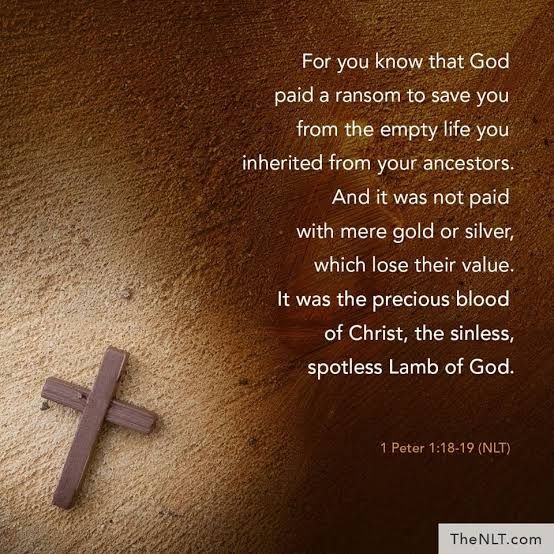
Key Meaning & Context
- Redemption / Ransom: Peter uses marketplace and slave-market imagery, explaining that a price was paid to free people from spiritual bondage.
- Worthless Currency: Temporal, physical wealth like silver or gold cannot buy spiritual salvation or forgive sin.
- The Lamb Without Blemish: Alludes to the Old Testament Passover lamb or temple sacrifice requirements (Exodus 12), pointing to Christ’s sinless and perfect nature as the ultimate sacrifice.
- Breaking Tradition: The “empty way of life” refers to aimless, non-saving traditions or pagan/ritualistic patterns handed down through generations.
1 Pet. 1:18-19 (GNT).
No one is normal by God’s standards, each of us carries certain abnormalities inherited from either the Parents or the World’s systems.
If you look at it through a spiritual or philosophical lens, the concept of “normal” is a human invention used to categorize, standardize, and often compare ourselves to others.
From a divine standpoint, “normal” doesn’t exist for a few reasons:
- Infinite Uniqueness: Every single person is created as an entirely unique individual. There is no factory setting or “standard blueprint” for a human being in the eyes of the creator.
- Flawed but Valued: No one is perfect or without flaws, meaning no one fits a pristine, idealized standard of “normalcy.” Yet, every individual is seen, known, and valued completely as they are.
- Beyond Human Labels: Human labels of normal vs. abnormal, or typical vs. atypical, fall away when looking at the depth of a person’s soul, heart, and individual journey.
Instead of trying to fit into a worldly mold of being “normal,” this perspective invites us to embrace our unique design, quirks, and complexities.
A new car is man-made, we can buy it for our comfort or needs, but never is a new life purchased! For it is heavenly, pure and eternal – it’s The life of God! Do you possess this?
“For all have sinned, and come short of the glory of God” is from Romans 3:23 in the Christian Bible (New Testament).
What the Verse Means
- Universal Sin: Every human being has missed God’s standard of perfection and committed acts or held attitudes against His will.
- The “Glory of God”: This refers to God’s supreme righteousness, holiness, and the purpose for which humans were created—to reflect His Character.
- No Distinction: The immediate context in Romans 3:22 notes that “there is no distinction”—meaning all people, regardless of background or moral effort, stand in the same need of grace.
The Context of Grace
- Romans 3:24: The thought does not end at verse 23; it continues to explain that humanity is “justified freely by His grace through the redemption that came by Christ Jesus”.
- Christian Perspective: The verse establishes the problem (human sin) to highlight the solution (God’s unmerited pardon and salvation offered through Jesus).
Remember this!
Reflection: What are you doing about your abnormalities?
The truth? The existence of God stimulates in believers righteous living, it changes us entirely! It is not like repackaged ‘materials’ or like a new car; we cannot buy salvation, or being ‘right’ with God, it is a gift to believers in Christ. It is the evidence of Christ; it is the ultimate life’s goal… So, get it today for tomorrow may be too late! Salvation!!!
God bless.🙏🔥


Leave a Reply