In Christian theology, the idea that God is The Author of our life story is a popular metaphor based on God’s sovereignty, foreknowledge, and active role in guiding human lives, though Christians hold varied views on how divine authorship interacts with human free will. ✨️ If we were be so bold to ask, the number of microseconds in our lives, it wouldn’t be told! Sin would run rampant with individuals banking on the Revelation! No Man knows the number of years/days/seconds I’m their lives – for an awesome reason.
The phrase “live every day like it’s your last” means focusing on the present moment, appreciating life, and avoiding regret by not putting off what matters.
Meaning and Purpose
- Focus on the present: It encourages you to stop wasting time on trivial worries.
- Show appreciation: It reminds you to value your loved ones and express gratitude.
- Chase your goals: It pushes you to pursue your dreams without waiting for a better time.
Why Taking It Literally Fails
- Impractical habits: If you literally treated every day as your final day, you might spend all your money or skip important long-term responsibilities like work and saving.
- Unsustainable lifestyle: Constantly seeking extreme thrills or high-intensity experiences wears you out quickly. [1]
- Better balance: A practical approach combines living fully today while still planning for a bright tomorrow. [1, 2]
Key Biblical Themes and Verses
- Pre-Ordained Days and Purpose: Scripture emphasizes that God knows the number of our days and has prepared a path or good works for us.
- God’s Overarching Sovereignty: Believers are viewed as participants or “characters” in a grand divine narrative rather than independent authors, trusting that God works all things together for good.
- Romans 8:28 (“And we know that in all things God works for the good of those who love him, who have been called according to his purpose.”)
- Psalm 138:8 (“The Lord will vindicate me; your Love, Lord, endures forever—do not abandon the works of Your hands.”)
- Jesus as the Center: The Bible presents God’s master narrative as culminating in Jesus Christ, referred to in Hebrews 12:2 as the “pioneer and perfecter [Author and finisher] of faith”.
Differing Perspectives on Free Will vs. Authorship
- Complete Sovereignty: Some traditions emphasize that God actively dictates or orchestrates every specific event, leaving no room for random chance and calling believers to radical surrender and patience through difficult chapters.
- Foreknowledge vs. Choice: As discussed among Christians on platforms like Reddit, opinions are mixed: some argue that God’s omniscience means He sees the full story in advance without stripping away real human choices, while others feel human agency operates strictly within the boundaries of God’s overarching design.
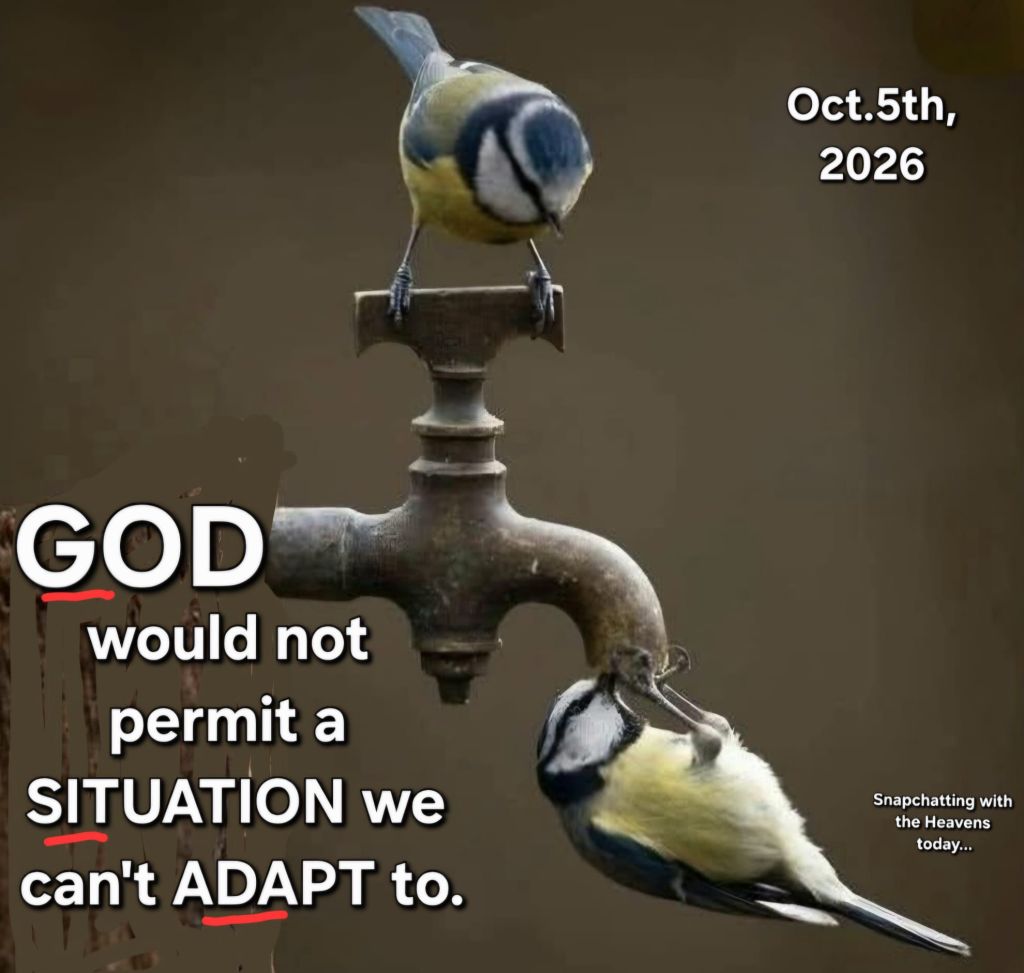
A WHISPER FROM HEAVEN!
📌Will God always change our situations to resolve our issues?
📌Have you had a problem without solutions?
📌What’s your utmost concern when you’re in trouble or in need?
📌Where lies your confidence for living?
“No temptations has overtaken you except such as is common to man; but GOD is FAITHFUL, Who will not allow you to be tempted beyond what you are able, but with the temptation will also make the way of ESCAPE, that you may be able to BEAR it”
1 Cor. 10:13.
Key Meanings
- Common trials: Your struggles are normal. Other people face the exact same things.
- God’s faithfulness: God does not abandon you when life gets hard.
- Limits on testing: God controls the limits of your tests. He makes sure you can handle them.
- A way out: God always gives you an escape route or an option to choose good instead of sin.
Reflection: Adapting to God’s ways transforms us!
Adapting to God’s ways transforms us from the inside out by replacing worldly patterns with divine truth and a renewed mind.
Key Ways Transformation Happens
- Renewing the Mind: Romans 12:2 instructs believers not to conform to the world, but to be transformed by changing how they think.
- Immersing in Scripture: Reading and meditating on the Bible aligns your heart and choices with God’s character and guidance.
- Relying on the Holy Spirit: Growth and self-control come through God’s Spirit rather than purely human effort.
- Casting Off Old Habits: Letting go of past attitudes creates space for God to rebuild your daily actions and responses.
No problem is new under Heaven, we only need to humbly submit and adapt to God’s will, rather than expecting the answers that suit our lust/selish desires. God did not take away the cuo of sorrow and cross from Jesus. He only gave Him the grace to bear it – it is my hope that this makes sense to us!
The question of whether God, The Father turned away or forsook Jesus while He hung on the cross is one of the most debated topics in Christian theology, centered around Jesus’ cry, “My God, My God, why have You forsaken Me?” (Matthew 27:46; Mark 15:34).
The two primary viewpoints on this moment break down as follows:
1. The View That God Turned Away / Forsook Jesus
- The Argument: Many Protestant and Reformed traditions (supported by figures like John Calvin and Martin Luther) teach that God the Father literally poured out His wrath and turned away from Jesus.
- The Reasoning:
- Jesus took upon Himself the sins of the entire world (2 Corinthians 5:21).
- Because a completely holy and pure God cannot look upon or fellowship with sin, the Father turned His face away and forsook the Son, causing Jesus to experience spiritual death and the full weight of divine judgment in humanity’s place.
- The Scriptural Anchor: Jesus’ explicit words on the cross: “My God, My God, why have You forsaken Me?”
2. The View That God Did Not Abandon Jesus
- The Argument: An alternative and increasingly discussed view across various Christian traditions (including Catholic, Eastern Orthodox, and many modern Trinitarian scholars) maintains that the Father did not literally abandon or turn His back on Jesus.
- The Reasoning:
- Psalm 22 Context: When Jesus quoted the first line of Psalm 22 (“My God, my God, why have You forsaken me?”), He was reciting a known prayer that actually ends in vindication and triumph. Furthermore, Psalm 22:24 states that God “hath not hid His face from Him, but hearkened unto Him”.
- Trinitarian Unity: A literal break, division, or abandonment within the Trinity would compromise the nature of God and the efficacy of the cross.
- Scriptural Support: Passages like 2 Corinthians 5:19 state that “God was in Christ, reconciling the world unto Himself” during the events of the cross rather than separating from Him.
- Expression of Anguish: Rather than a literal cosmic rejection, the cry expresses the intense, genuine human and spiritual agony of bearing the penalty, shame, and isolation of sin.
The truth? VICTORY in CHRIST mandated ADAPTING to His ways at all costs; besides, hardships GROW us better, so many will be carried into the grave… understood these?
Shalom.🙏🔥


Leave a comment